
1. A building conceived as a vertical village
According to Wikipedia, work began in October 1947, in the context of the reconstruction launched by the Ministry of Reconstruction. Le Corbusier experimented with a “housing unit”: a large building bringing together homes, services and shared facilities. It was opened on 14 October 1952. 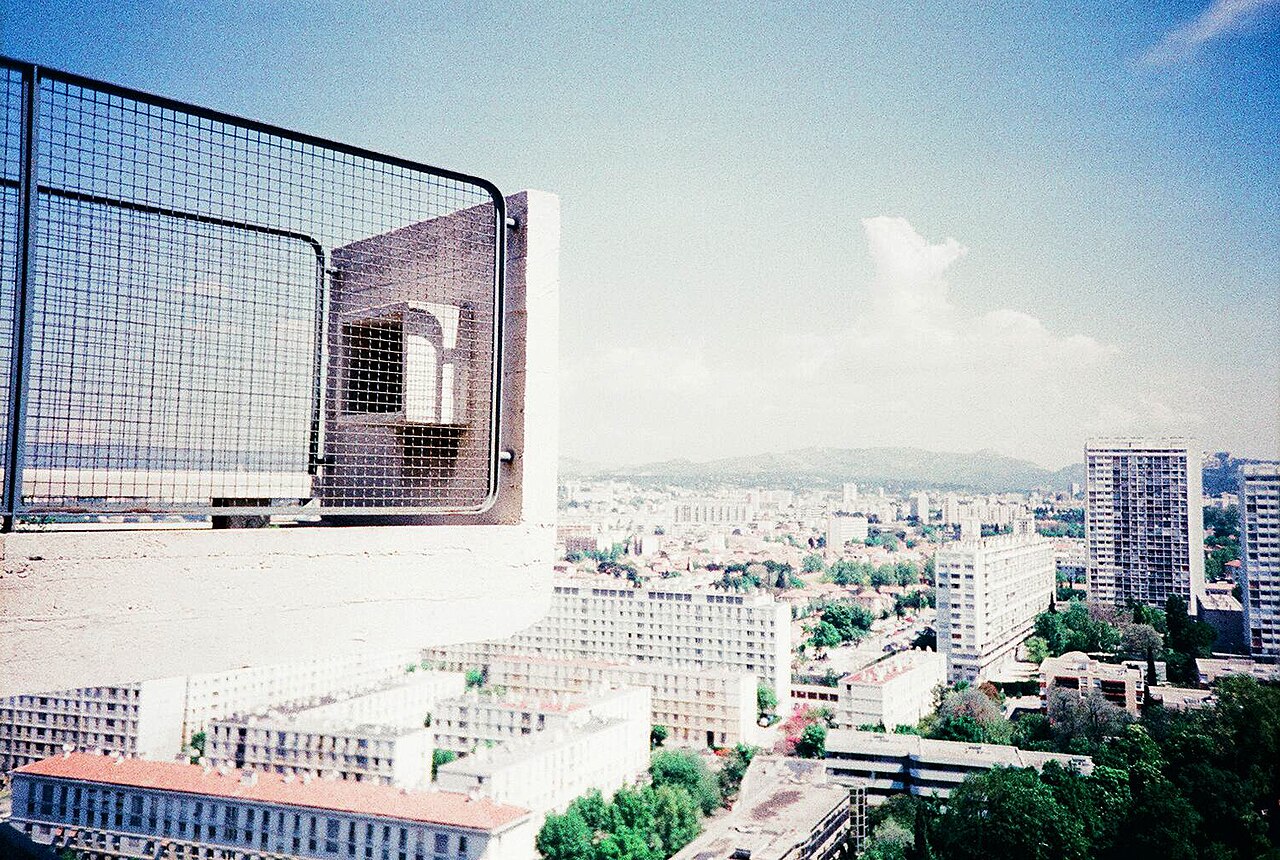
2. The building in figures
- 137 m long, 56 m high, 24 m wide.
- 36 stilts 8.50 m high, freeing the ground.
- 337 flats of 23 different types, on seven double-height (duplex) floors, plus a 21-room hotel.
- Internal streets serve the homes, with central corridors 2.96 m wide.
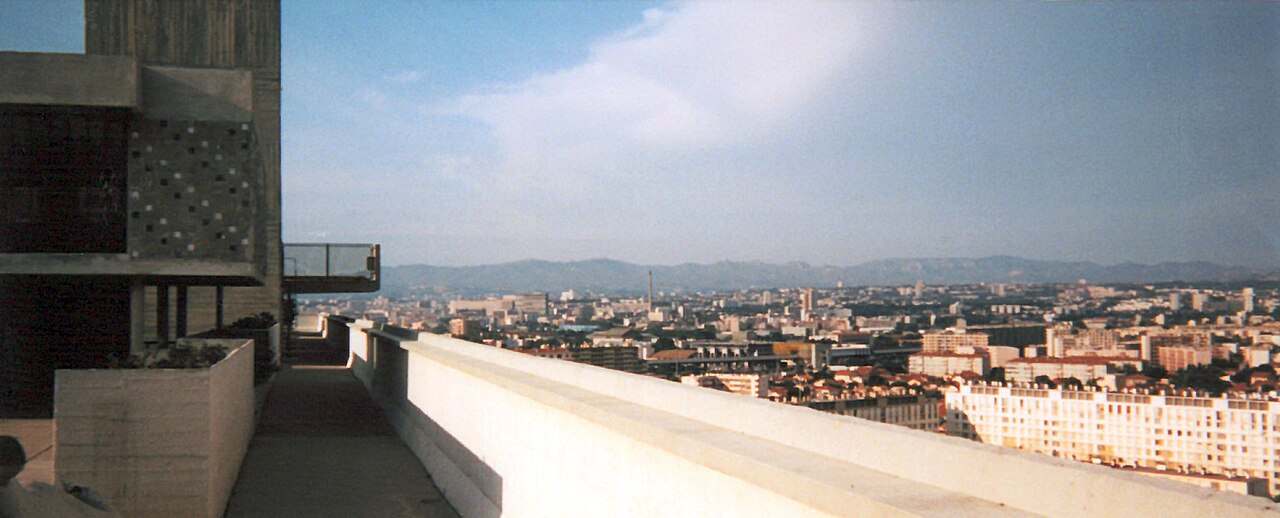
- A roof terrace with a 300 m track, a gym and a school, among other facilities.
3. The Modulor
The proportions rely on the Modulor, a measuring system based on human proportions and the golden ratio (about 1.619 between the reference height and the height of the navel). The building was designed for 1,600 residents. 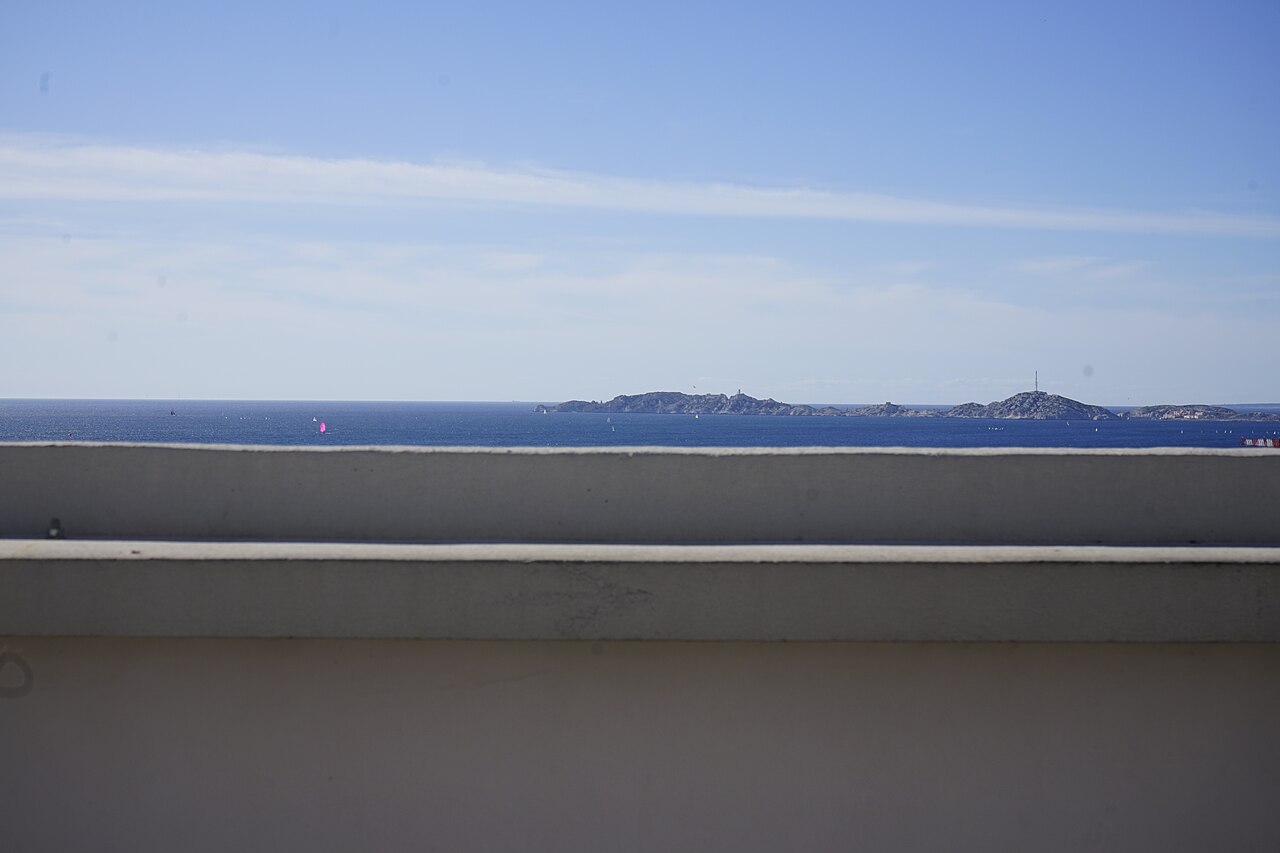
4. A protected monument and UNESCO site
The building was listed as a historic monument on 26 October 1964, then classified in 1986, with further protections in 1995 and 2023. It was inscribed by UNESCO in 2016 (17 July) as part of Le Corbusier's architectural work. 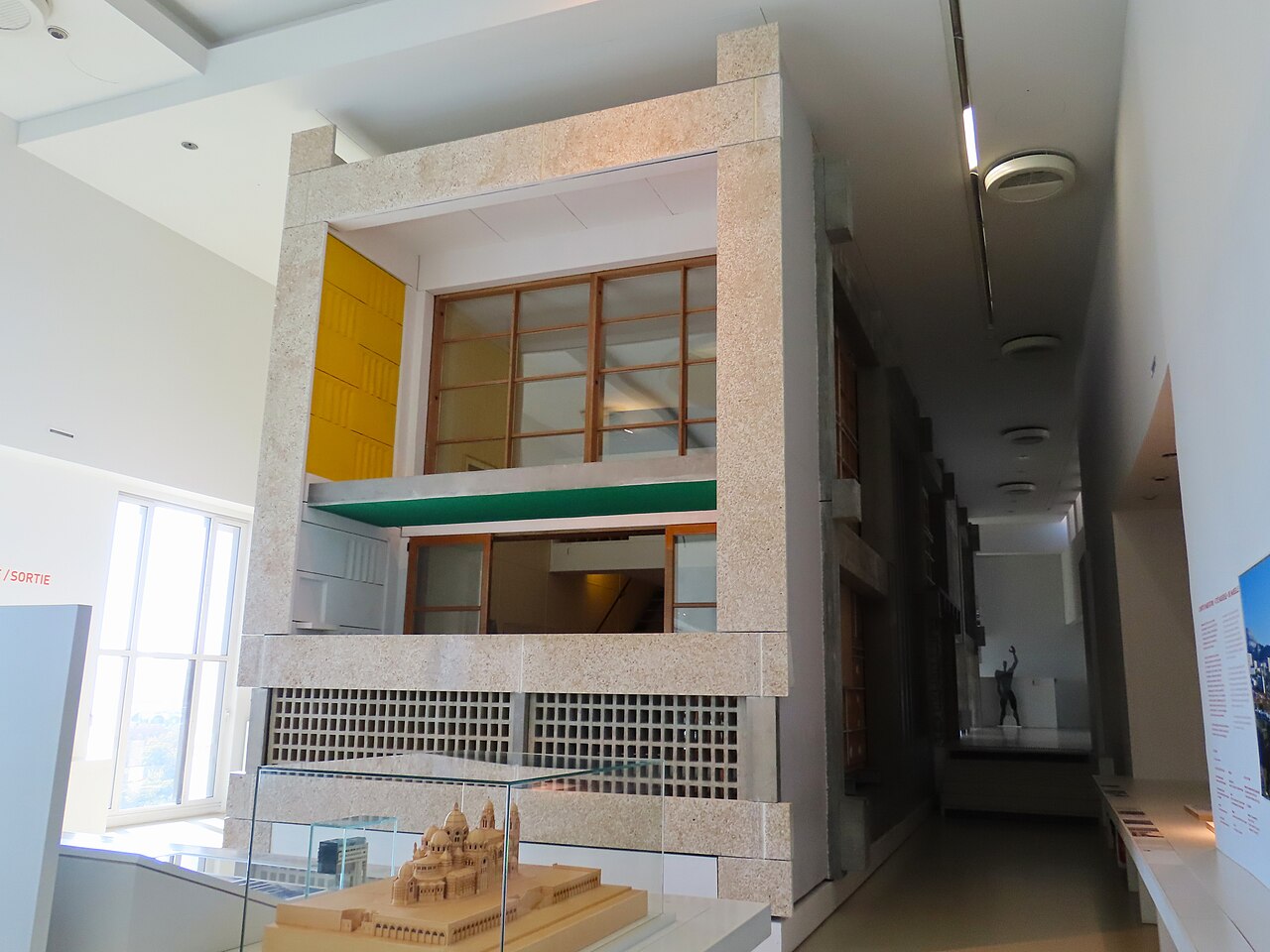
5. Legacy and Marseille's co-ownerships
The Cité radieuse served as a model for other housing units and for post-war collective housing. In the national co-ownership register, Marseille's arrondissements count 18,682 co-ownerships: 7,556 are declared built before 1949 and 5,357 between 1949 and 1974. For these buildings the practical issues are insulation, façade renovation and the collective DPE (in French).
Photo credits
- The Cité radieuse seen from outside — Cyril Caton, CC BY 2.0, Wikimedia Commons
- The Cité radieuse, general view — seier+seier, CC BY 2.0, Wikimedia Commons
- View from the Cité radieuse towards the sea and the Frioul islands — Carl Ha, CC BY-SA 4.0, Wikimedia Commons
- The building, shown at the Cité de l'architecture et du patrimoine — Rémih, CC BY-SA 4.0, Wikimedia Commons
Sources
- Cité radieuse de Marseille — Wikipédia
- Category:Unité d'habitation (Marseille) — Wikimedia Commons (photographies)
Frequently asked questions
Who built Marseille's Cité radieuse?
The architect Le Corbusier: first stone on 14 October 1947, opened on 14 October 1952.
How many homes does it have?
337 flats of 23 different types, and a 21-room hotel, according to Wikipedia.
What is the Modulor?
A proportion system based on human proportions and the golden ratio, used by Le Corbusier to size the building.
Is the Cité radieuse protected?
Yes: listed as a historic monument in 1964, classified in 1986, and inscribed by UNESCO in 2016 with other Le Corbusier works.
Look up your building's record
Construction period, units, managing agent, heating and surroundings: public data from the national co-ownership register.
Search a co-ownershipInformational article based on Wikipedia (“Cité radieuse de Marseille”); this source does not confirm the building's own co-ownership status, which is not asserted here. UNESCO and Ministry of Culture pages were not consulted. Photographs come from Wikimedia Commons under Creative Commons licences (credits at the bottom). Co-ownership figures come from the national register and cover Marseille's arrondissements. Source titles are given in French.